
Trakhees, the approvals arm of Ports, Customs and Free Zone Corporation (PCFC), governs construction approvals in Dubai's special development zones — communities like Palm Jumeirah and the waterfront developments where permitting runs through the Trakhees portal rather than the standard Dubai Municipality channel. Its rules and circulars set which permits, NOCs and occupancy approvals these zones require, and they are published on pcfc.ae as the legal framework. For any project inside a Trakhees-governed zone, those published rules — not the general Dubai Municipality path — determine what you must submit and when.
What the Trakhees rules and circulars cover
The rules and circulars published under the Trakhees section of pcfc.ae are the working rulebook for construction in special development zones. They are not a single law but a layered set of regulations, circulars and service requirements that together govern how a building is designed, approved, built and occupied inside these zones.
- Building permits and plan approvals for new works, extensions and fit-outs.
- Site-specific NOCs such as the mobilization NOC and signboard NOC required before works begin.
- Engineering and design compliance against the zone's own standards.
- Occupancy, completion and handover approvals at the end of a project.
- Contractor and consultant obligations for working inside a governed community.
Which zones fall under Trakhees jurisdiction
Jurisdiction follows the list of special development zones defined by PCFC. If your site is in one of these communities or free zones, the approvals path runs through Trakhees rather than the standard authority channel. The zones most projects touch are:
- Palm Jumeirah and the Palm development.
- Jumeirah Islands, Jumeirah Bay and the Al Sufouh communities.
- Free zones serviced by the Trakhees portal, including JAFZA, DP World and Dubai World Trade Centre.
- Other special development zones listed by PCFC on pcfc.ae.
The governing test is simple: confirm whether the site falls inside a PCFC-defined zone before you plan the approval route. Projects inside the zones file with Trakhees; projects outside them use the standard authority channels.
How Trakhees, PCFC and Dubai Municipality fit together
PCFC is the parent — Ports, Customs and Free Zone Corporation — and Trakhees is its approvals and permits arm for construction. Dubai Municipality sets the emirate-wide building standards, and Trakhees applies equivalent rules inside its zones through the portal. In practice this means a project in a Trakhees zone follows the same broad discipline of permits, NOCs and inspections, but the submission, review and approval all happen through Trakhees against the zone's published rules.
The approvals that run through the Trakhees portal
| Approval | What it covers | When you need it |
|---|---|---|
| Building permit | Plan and design approval for construction or fit-out works | Before any works begin on site |
| Mobilization NOC | Site establishment — plant, equipment and site office | Before the contractor moves onto site |
| Signboard NOC | Site hoarding, project name boards and signage | Before hoarding or signage is installed |
| Occupancy / completion | Permission to occupy the completed works | At handover, after inspections pass |
| Zone NOCs | Community-specific no-objections for works | Throughout the project, per zone rules |
Where to find the current rules and circulars
Trakhees publishes its rules and regulations, and the circulars that amend or clarify them, on the PCFC website. The portal is the source of truth — printed guides and third-party summaries drift out of date. The places to check are:
- The Trakhees rules and regulations page on pcfc.ae — the core legal framework.
- Current circulars issued to contractors, consultants and community managers.
- Individual service pages, which state the exact documents and steps for each approval.
- Portal notices covering fee updates and processing changes.
How a project moves through the Trakhees approval path
- Confirm the site falls inside a PCFC-defined special development zone.
- Register or update the project on the Trakhees portal.
- Prepare the building permit application with the design drawings and supporting documents.
- Submit the mobilization NOC and signboard NOC ahead of site establishment.
- Complete any zone-specific NOCs required by the community.
- Receive approvals and display the permitted signage before site works begin.
- Undergo the required inspections during construction.
- Obtain the occupancy or completion approval at handover.
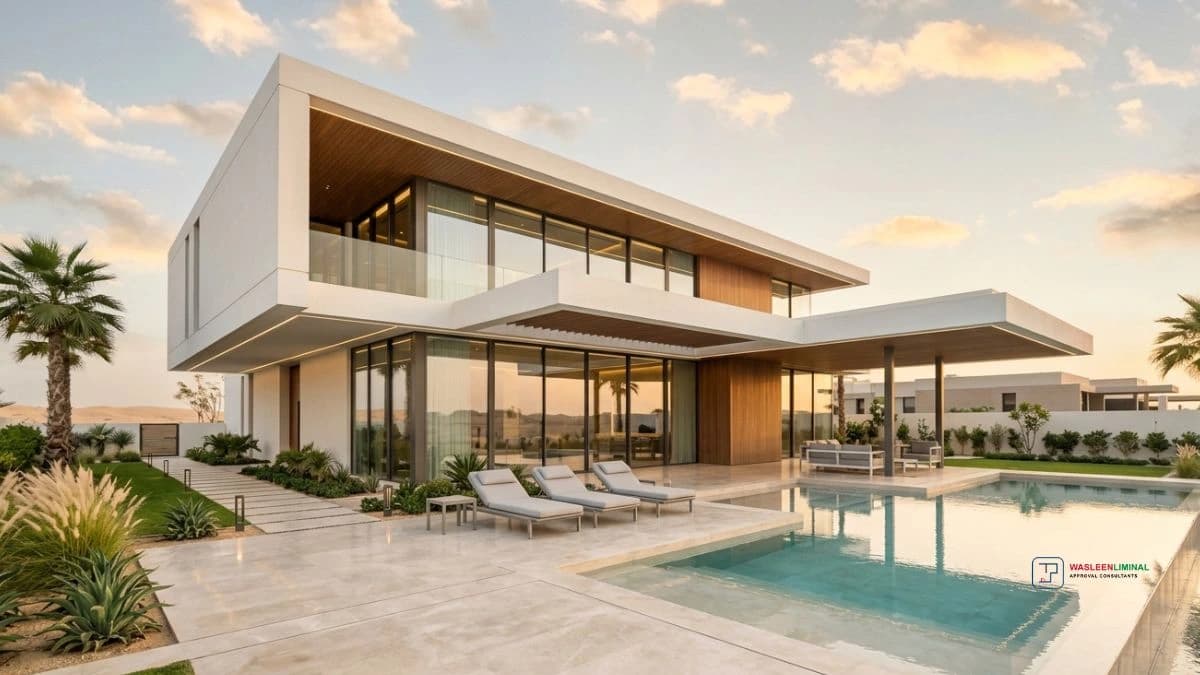
A worked example is the fit-out of a villa on Palm Jumeirah: the project confirms the zone, registers on the portal, files the building permit with the design drawings, submits the mobilization and signboard NOCs with the site plan and licence, then tracks each application to issuance before the contractor sets up. The same file that satisfies the permit also feeds the NOCs, which is why assembling it once, completely, is faster than submitting piecemeal.
Indicative timelines and fees
The figures below are indicative, drawn from the published processing patterns for Trakhees and Dubai Municipality approvals. Confirm current fees and timelines on pcfc.ae before budgeting:
| Item | Indicative figure | Notes |
|---|---|---|
| Trakhees portal registration | 2–4 business days | If the contractor is not already registered |
| NOC review (mobilization / signboard) | 3–7 business days | Per project application |
| NOC issuance | 1–3 business days | After authority sign-off |
| Indicative NOC fee | AED 120–500 per certificate | Range drawn from authority NOC patterns |
| Building permit review | Confirm on pcfc.ae | Varies by scope and zone |
All figures are indicative and subject to change. Verify current fees and timelines against pcfc.ae before committing to a programme.
How this differs from a standard Dubai Municipality approval
The difference is where you submit, not whether you need approval. A mainland project files its building permit and NOCs with Dubai Municipality; a project in a special development zone files the equivalent applications through Trakhees. The Dubai Municipality building permit still matters as the reference standard — and for signage the same design guidelines apply — but inside a zone the portal, the documents and the fee schedule are Trakhees'. Knowing which authority holds your file is the first decision in any approval plan.
In a special development zone the question is never whether your project needs approval — it is which portal holds your file, and whether you read the zone's circulars before you designed the works.
What slows approvals in special development zones
- Starting the application after the site date is set, compressing the review window.
- Submitting against outdated rules or the wrong service page on the portal.
- Missing zone-specific NOCs that the community requires alongside the building permit.
- Sending designs that do not meet the zone's own engineering standards.
- Ignoring circular updates that change document or fee requirements mid-project.
The bottom line
Trakhees rules and circulars are the governing framework for construction in Dubai's special development zones. They determine which permits, NOCs and occupancy approvals your project needs, where you file them and what the review looks like. Confirm your zone on pcfc.ae, read the current circulars before you design, and file the NOCs with the building permit — the approvals then arrive in the order your programme needs.
Frequently asked questions
What is Trakhees and how does it relate to PCFC?
Trakhees is the approvals and permits arm of Ports, Customs and Free Zone Corporation (PCFC). It administers construction approvals inside Dubai's special development zones, while PCFC is the parent corporation that owns the zones and the rules under which they operate.
Which areas in Dubai fall under Trakhees?
Trakhees governs the special development zones defined by PCFC, including Palm Jumeirah, Jumeirah Islands, Jumeirah Bay, the Al Sufouh communities and free zones serviced by the Trakhees portal such as JAFZA, DP World and Dubai World Trade Centre. The full list is published on pcfc.ae.
What is the difference between Trakhees and Dubai Municipality for approvals?
Dubai Municipality handles approvals for most mainland projects, while Trakhees handles the equivalent permits, NOCs and occupancy approvals inside special development zones. The standards are broadly the same, but the submission portal, documents and fee schedule are Trakhees' inside the zones.
Where can I find the current Trakhees rules and circulars?
The current rules and regulations are published under the Trakhees section of pcfc.ae, together with circulars and individual service pages. That portal is the source of truth — always confirm documents and fees there before assembling a file.
What approvals do I need before starting works in a special development zone?
You typically need the building permit plus the site-specific NOCs — including the mobilization NOC and signboard NOC — before works begin, and any community approvals the zone requires. Confirm the exact set against the zone's service pages on pcfc.ae.
Do Trakhees rules apply in JAFZA and other free zones?
Yes. JAFZA, DP World, Dubai World Trade Centre and other free zones whose approvals run through the Trakhees portal follow the same rules and circulars, so their projects use the Trakhees approval path.
How long do Trakhees approvals take?
NOC review is typically in the order of 3–7 business days per application, with issuance around 1–3 business days after sign-off. Timelines are indicative — confirm the current service status on pcfc.ae.
Can an approval consultant manage Trakhees applications?
Yes. Approval management services confirm the zone, prepare the site documents, submit the building permit and NOCs through the Trakhees portal and track them to issuance, so a project in a special development zone keeps its programme.